


Custom Soccer Trophy Order Guide: From Logo Artwork to Bulk Production
Oct 26, 2026
Leave a message
A tournament organizer ordering 150 trophies needs more than an attractive design. The champion's cup, runner-up awards, goalkeeper prizes, and participation trophies must carry the correct wording, match the approved finish, arrive on time, and remain consistent across the full order. One incorrect logo file or engraving list can create problems across dozens of finished awards.
At JYB, we manufacture custom trophies in Shenzhen, China, with capabilities covering mold making, casting, plating, and finishing. We help buyers turn event artwork and product requirements into manufacturing specifications, samples, bulk orders, and repeatable designs.
This article explains how to prepare a custom soccer trophy order, calculate the production window, manage quality across a large batch, and plan future orders with fewer revisions.

How to Order Custom Soccer Trophies: Five Steps
Step 1: Define the award types and quantities
Start with the event, recipients, design requirements, and total quantity. A tournament may need a championship trophy, runner-up awards, individual player awards, and participation trophies. Each group can have different dimensions, finishes, and engraving requirements.
For example, an order for 150 trophies could contain:
|
Award category |
Example quantity |
Main specification |
|
Champion awards |
20 |
Larger design, event name, championship year |
|
Runner-up awards |
30 |
Matching theme with a different award title |
|
Individual awards |
20 |
Personalized player or goalkeeper details |
|
Participation trophies |
80 |
Standard design with event branding |
|
Total |
150 |
Four defined award groups |
These quantities illustrate how to organize an order; they are not a record of a completed customer project.
Prepare a separate line for each design, size, finish, and personalization option. A total of 150 pieces does not automatically mean 150 identical products. Clear quantities help us plan materials, tooling, decoration, inspection, and packing.
Step 2: Choose the material, size, and finish
The material influences the trophy's appearance, weight, shape, and decoration options.
- Zinc alloy: Suitable for cast shapes, raised details, and metallic finishes.
- Resin: Suitable for sculpted figures, distinctive silhouettes, and designs with complex visual forms.
- Combined materials: A metal trophy body, customized emblem, and separate base can create a more distinctive award.
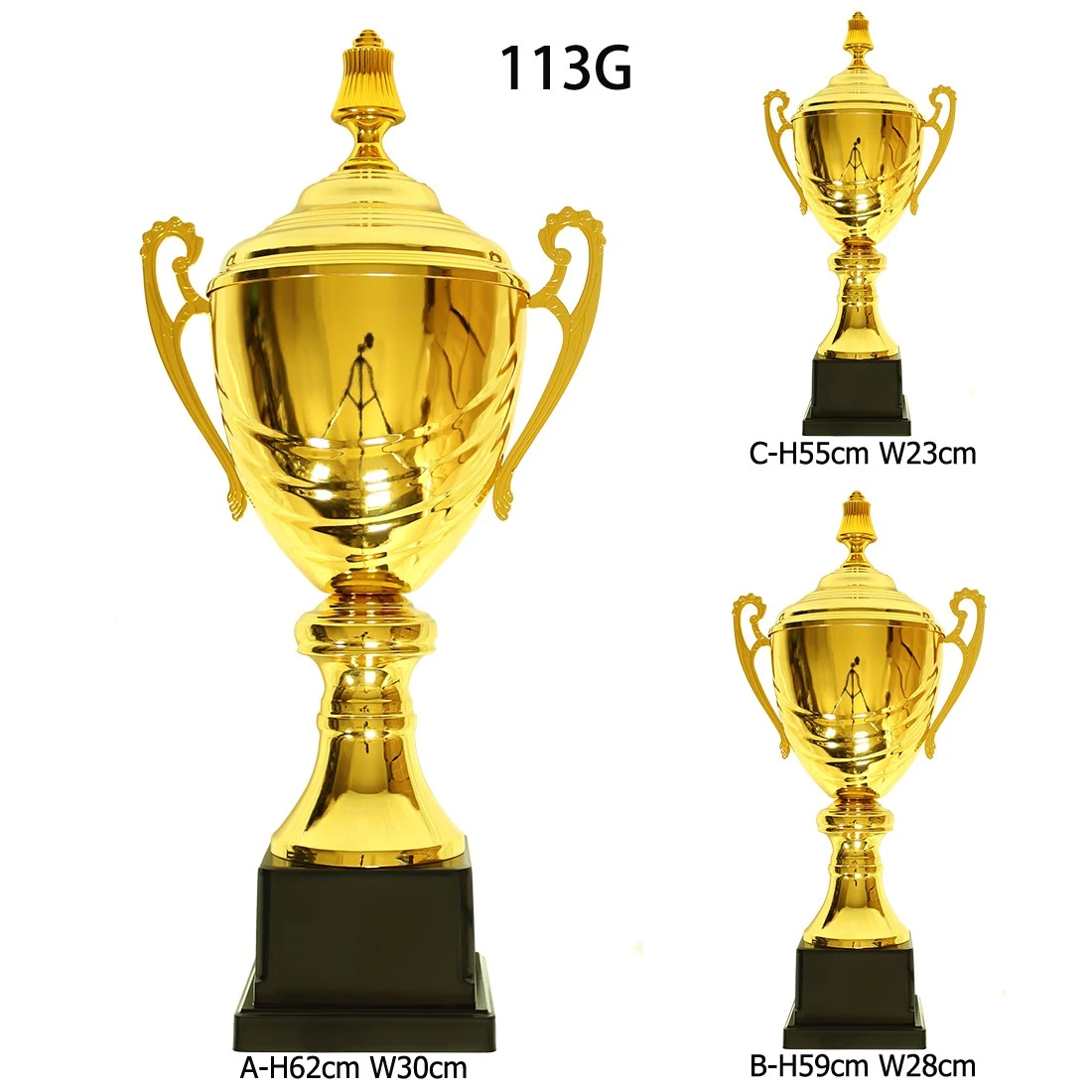
Specify the overall height, base dimensions, main material, finish, logo treatment, and packaging. If the trophy includes several components, identify each component in the reference drawing.
A goalkeeper trophy, for example, might feature a goalkeeper figure, gloves, or a save in progress. A club championship trophy may place more emphasis on the club crest, competition name, and event year. The design should make the award category immediately recognizable.
Step 3: Submit the artwork and approve the proof
Send the club logo in a vector format such as AI, EPS, or editable PDF when available. A high-resolution PNG can support the initial review, although some production methods require additional artwork preparation.
Include the exact spelling and capitalization of all names, event titles, dates, award categories, and player details. If several teams are involved, label the files clearly and keep each team's personalization list separate.
Before approving the design, check:
- Logo size and placement
- Engraving text and spelling
- Trophy proportions and dimensions
- Finish and color references
- Base and nameplate details
- The drawing or artwork revision number
The approved revision becomes the reference for sampling and production. If the artwork changes afterward, record the change and approve the new version before manufacturing continues.

Step 4: Review the sample and authorize the order
For a new custom design, review a physical sample whenever the project requires one. Check the shape, dimensions, surface finish, logo visibility, assembly, and engraving against the approved specification.
For an existing design, verify whether the original tooling and production records are available. A familiar design can shorten development work, but changes to the material, finish, dimensions, or decoration still require review.
Before authorizing bulk production, settle the commercial details in writing: final quantity, unit price, tooling and sample charges, packaging, payment milestones, delivery destination, shipping method, and required arrival date.

Step 5: Inspect, pack, and dispatch
The finished order needs a final check against the approved specification. Personalized text and quantities require particular attention because a defect in one nameplate can affect the recipient's award even when the rest of the trophy is correct.
For a multi-design order, organize the products by award category or team. Carton labels and a matching packing list help event organizers distribute awards without sorting every item from scratch.
Agree on the inspection requirements and shipping arrangements before production begins. This gives both sides a clear reference if a discrepancy appears during inspection or after delivery.

What Information Do We Need for a Custom Trophy Quote?
A complete inquiry helps us assess the manufacturing method, customization work, and packing requirements before preparing a quotation.
|
Information |
Details to provide |
Why it matters |
|
Quantity |
Total pieces and quantities by design |
Supports production and material planning |
|
Dimensions |
Overall height, base size, and drawing |
Defines product proportions |
|
Material |
Zinc alloy, resin, or a combination |
Determines the suitable manufacturing route |
|
Artwork |
Logo files, text, colors, and placement |
Defines decoration requirements |
|
Finish |
Gold, silver, bronze, painted, or other specified finish |
Establishes the intended appearance |
|
Personalization |
Names, positions, teams, or award categories |
Prevents text and allocation errors |
|
Packaging |
Individual boxes, inserts, or bulk cartons |
Affects protection and shipping volume |
|
Delivery |
Destination, preferred shipping method, and arrival date |
Supports schedule planning |
|
Repeat-order details |
Previous drawing, approved sample, or order reference |
Helps maintain consistency |
For Football Team Trophies ordered for several clubs, a spreadsheet is useful. List each club, award type, quantity, engraving, logo file, and packaging requirement on a separate row.
Distributors should also identify likely repeat-order quantities. Keeping the same specifications and artwork for future orders makes product matching easier and reduces the chance of reintroducing design errors.
Inside Our Trophy Manufacturing Process
Custom trophy production links design preparation, component manufacturing, surface finishing, decoration, assembly, and inspection. Each stage affects the final appearance and consistency of the product.

Mold making and design preparation
Before tooling begins, the design needs to define the trophy's dimensions, visible details, logo position, and component structure. Fine lettering, narrow gaps, raised emblems, and complex figures require attention because these details affect how clearly the finished trophy reproduces the artwork.
For a new design, the approved drawing provides the reference for mold development and sample review. For repeat orders, the drawing and relevant tooling records help preserve the original specifications.
Casting and component preparation
Zinc-alloy trophy components are formed through casting and then prepared for finishing. The visible surfaces, edges, raised details, and areas around the logo need attention before the final finish is applied.
Resin products use a different manufacturing route. The selected material and shape determine how the design is formed and finished. Choosing the manufacturing method at the design stage helps align the final product with the intended appearance.
Plating, finishing, and decoration
Plating and finishing give a trophy its final surface appearance. Gold, silver, and bronze finishes need a consistent reference so that matching awards look coordinated within the same batch.
Logo decoration and personalized text must also follow the approved artwork. Before bulk production, the sample or approved proof should establish the position, size, and appearance of these details.
Assembly and inspection
A trophy may include a main body, base, nameplate, emblem, or other components. Assembly checks should cover the fit of these parts, attachment quality, and the stability of the finished award.
Final inspection then compares the finished products with the approved sample and written specification. Appearance alone is not enough: dimensions, text, assembly, finish, quantity, and packaging all contribute to an acceptable shipment.
Our manufacturing background
Our trophy manufacturing operation is based in Shenzhen, China. Our company profile includes approximately 2,500 m² of factory space, more than 90 employees, and four production lines. Our metal craft manufacturing experience dates back to 2003, and our capabilities include mold making, casting, plating, and finishing.
These capabilities support projects that require custom shapes, branded details, and coordinated finishes. For buyers, the most useful starting point is a clear product specification that links the design, approved sample, bulk order, and final inspection.

MOQ, Pricing, Samples, and the Full Delivery Window
Minimum order quantity
The minimum order quantity depends on the selected design and the amount of customization required.
An existing trophy design with standard specifications can have different commercial terms from a new design requiring mold development. Adding a logo or engraved nameplate also creates different work from producing an unmodified standard product.
We distinguish between three order types:
- Existing design: A current style with an established shape and standard finish.
- Existing design with customization: A current style with a logo, engraving, or other approved decoration.
- New custom design: A new shape, mold, or more extensive product development.
For selected existing designs, orders may start from one piece. A one-piece starting quantity does not apply automatically to every new mold or custom project. The quotation should state the applicable MOQ and list tooling, sample, decoration, and packaging charges separately where relevant.

Sample and bulk production lead times
The planning ranges used for selected trophy orders are:
|
Production stage |
Planning range |
Schedule begins when |
|
Sample development |
15–35 days |
The required artwork and design specifications are ready for development |
|
Bulk production |
20–45 days |
The approved sample or final production specification is released for manufacturing |
These ranges are planning references for selected orders, not a guarantee for every trophy design or quantity. New tooling, complex shapes, sample revisions, and changes after approval can extend the schedule.
The full delivery window includes more than the factory's production time. It also accounts for design preparation, sample approval, any required revisions, inspection, packing, transit, and customs clearance where applicable.
A 150-piece order: how to calculate the schedule
Consider a hypothetical order of 150 trophies using a selected manufacturing process.
|
Stage |
Planning approach |
|
Artwork preparation |
Finalize logos, dimensions, text, finishes, and quantities |
|
Sample development |
Allow 15–35 days as a planning range |
|
Sample approval |
Review the sample and resolve any required changes |
|
Bulk production |
Allow 20–45 days as a planning range after release |
|
Final inspection and packing |
Complete the agreed checks and prepare the shipment |
|
Shipping and customs |
Add transit time based on the route and shipping method |
If sample development and bulk production take place sequentially, their combined planning range is 35–80 days before adding inspection, packing, shipping, and customs clearance.
This calculation gives buyers a starting point for scheduling a tournament order. It is not a promised arrival window. The actual schedule needs to account for the selected product, confirmed quantity, approval dates, and shipping arrangements.
A 500-piece order should not automatically use the same schedule as a 150-piece order. The larger quantity requires a production plan that accounts for material availability, production capacity, decoration work, inspection resources, and packing. The confirmed order schedule should specify the quantity, milestones, and dispatch plan instead of relying on a simple quantity-to-days calculation.
Batch production, split shipments, and consistency
For a large tournament order, the first completed piece can serve as a production reference. The buyer and manufacturer should agree on the sample or first-piece approval process before the full batch proceeds.
Where the order includes several designs, group the production and inspection records by product type. This makes it easier to trace finish differences, engraving errors, or missing quantities to the relevant batch.
Split shipments can help when some awards are needed earlier than others. For example, championship trophies and individual awards may be packed and dispatched separately if the schedule, quantities, and commercial terms support that arrangement. The order should state the quantity in each shipment, inspection requirements, packing list, and agreed dispatch date.

What determines the price?
A useful quotation separates the main cost components:
- Trophy and base
- Mold or tooling
- Sample development
- Logo decoration and personalization
- Individual packaging and protective inserts
- Freight and other agreed shipping charges
This breakdown helps buyers compare quotations on a like-for-like basis. It also provides a clearer starting point for repeat orders, especially when tooling and artwork already exist.

Shipping terms and payment arrangements
The quotation and sales contract should state the payment schedule, shipping method, named delivery destination, applicable Incoterm and named place, and responsibility for freight, insurance, and customs arrangements.
Sample charges and whether any portion is credited against a bulk order should also be stated in writing. This prevents assumptions about refunds or credits from becoming a dispute after the sample has been produced.

Quality Control for Bulk Soccer Trophy Orders
Bulk quality control needs a written specification, a clear approval reference, and documented inspection results. A sample alone cannot communicate every acceptance requirement unless the buyer and manufacturer agree on what it represents.
|
Inspection point |
Common problem |
What to check |
|
Shape and dimensions |
Incorrect proportions or size |
Compare against the approved drawing and sample |
|
Surface finish |
Scratches, pits, stains, or uneven plating |
Inspect visible surfaces under consistent lighting |
|
Logo and engraving |
Incorrect spelling, alignment, or artwork version |
Match against the approved artwork and personalization list |
|
Color and finish |
Noticeable differences across the batch |
Compare with the agreed finish reference |
|
Assembly |
Loose parts or unstable bases |
Check attachment, fit, and standing stability |
|
Quantity and packing |
Missing pieces or damaged cartons |
Reconcile counts and inspect protective packaging |
Check personalized details piece by piece
Names, team titles, event years, and award categories deserve special attention. For orders containing personalized text, check each item against the approved list. A sampling-only approach can miss a single incorrect name even when the overall batch looks consistent.
Use a defined inspection plan
Agree on which characteristics require a check on every unit and which can be assessed through sampling. Personalized text and quantity are strong candidates for individual verification; other inspection items can follow the written sampling plan agreed for the order.
Record the inspection results, approved artwork version, sample reference, carton count, and any nonconforming items. These records help the buyer and manufacturer identify problems and agree on corrective action.
Retain a reference for repeat orders
Keep the approved drawing, sample reference, finish information, and packaging specification together. For repeat production, compare the new batch with the documented reference and record any approved changes.
If a quality issue appears, identify the affected items, document the problem with photographs and the order reference, and agree on a corrective action before closing the case. The response may involve sorting, rework, replacement, or another remedy agreed in writing, depending on the defect and order terms.
Common Mistakes in Custom Trophy Orders
Approving artwork without checking every detail
A logo can look correct while the event year, team name, or award title is wrong. Review the final proof at a readable size and approve the exact version that will be used in production.
Providing only a total quantity
A request for 300 trophies is incomplete when it includes different sizes, finishes, or personalized names. A line-by-line quantity breakdown makes quotation, production, inspection, and packing more accurate.
Planning around the production date alone
Factory completion is not the same as delivery to the event venue. Include sample approval, manufacturing, inspection, packing, transit, and customs clearance in the schedule.
Changing the design after approval
A new logo or engraving list can affect production files and completed components. Record every approved change and identify the latest revision before work continues.
Ignoring the next order
A repeat order becomes harder when the buyer has no final drawing, finish reference, or personalization record. Keep the approved specifications and relevant tooling information so the next order starts from an established reference.

How to Choose a Soccer Trophy Manufacturer in China
When comparing manufacturers in China, assess the production process, order controls, communication, and commercial terms-not only the catalogue image or unit price.
Use the following questions during supplier evaluation.
Manufacturing capability: Can the supplier explain the mold making, casting, plating, finishing, and assembly processes relevant to your design?
Design control: Does the quotation refer to a defined drawing and artwork version?
Sample approval: Is the approval process clear, including how revisions are handled?
Batch consistency: How are finishes, dimensions, personalization, and quantities checked?
Production planning: Does the schedule distinguish sample development, bulk production, inspection, and dispatch?
Repeat-order management: Can the approved drawings, finish references, and tooling records be retained where applicable?
Commercial terms: Are sample fees, tooling charges, payment milestones, packaging, and shipping responsibilities written into the quotation or contract?
Problem resolution: Does the order documentation explain how defects, shortages, and shipping damage are reported and resolved?
For clubs and tournament organizers, the main priorities are accurate personalization, a consistent appearance, and delivery before the event. For wholesalers and distributors, repeatability, documented specifications, and the ability to organize multiple product types become particularly important.
At JYB, our manufacturing capabilities cover mold making, casting, plating, and finishing. We use the product requirements, artwork, quantity breakdown, and delivery plan as the basis for defining a custom trophy order.

Frequently Asked Questions
Q: Can I order one custom soccer trophy?
A: Selected existing designs may be available from one piece. A new custom shape involving mold development can have different minimum quantities and setup charges. The quotation should identify the applicable MOQ for the chosen design.
Q: Can you add a club logo and individual names?
A: Custom logos and personalized text can be included in the product specification. Provide the artwork and a complete list of names, award categories, and quantities. Approve the final proof before production so the same version is used throughout the order.
Q: How long does a bulk soccer trophy order take?
A: The planning ranges are 15–35 days for sample development and 20–45 days for bulk production for selected orders. The combined 35–80-day range covers those two stages when they run sequentially; it excludes any additional inspection, packing, shipping, and customs time.
Q: Can I reorder the same trophy next season?
A: Yes, a repeat order is easier to manage when the approved drawing, artwork, dimensions, finish reference, and packaging details are retained. The order should also identify any changes to the design or personalization.
Q: What is the difference between a goalkeeper trophy and a team trophy?
A: A goalkeeper trophy often highlights the goalkeeper role through a figure, gloves, or an action pose. A team trophy usually emphasizes the club, league, or championship. Both can incorporate event logos, engraved text, and customized details.
Q: Can a World Soccer Trophy design use our own event branding?
A: A trophy inspired by an international soccer event can carry your event name, logo, colors, and award details. The design and product description must not imply official affiliation with a tournament or organization without authorization.
Q: What should I check before paying for a sample?
A: Confirm the sample charge, expected development time, shipping cost, design revision process, and whether any sample fee is credited toward the bulk order. Keep the approved artwork and sample specification as the reference for production.
Q: What happens if the delivered trophies have defects?
A: The purchase terms should explain how to report defects, shortages, or transit damage, including the required photographs, order references, and reporting period. Agree on the process for reviewing the issue and determining corrective action before the order is dispatched.
Q: How should I plan a 500-piece order?
A: Start with a complete quantity breakdown, finalized artwork, packaging requirements, and a required arrival date. The production plan should identify the confirmed schedule, inspection stages, and any split shipments. A 500-piece order needs its own schedule rather than an automatic extension of the 150-piece example.

Request a Quote for Custom Soccer Trophies
Planning a club championship, school tournament, league presentation, or wholesale order? Prepare your target quantity, trophy reference, logo artwork, personalization list, packaging requirements, and required arrival date.Contact JYB with these details to request a quotation. We can define the product specification, applicable MOQ, sample requirements, production schedule, quality checks, and shipping arrangements for your order.A clear specification at the start helps reduce artwork revisions, maintain consistency across the batch, and keep the delivery plan aligned with your event schedule.