




What is Medal
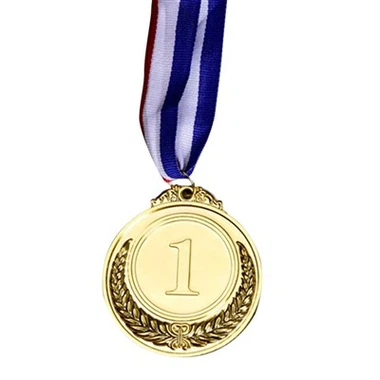
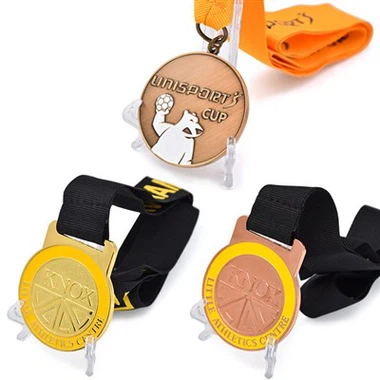
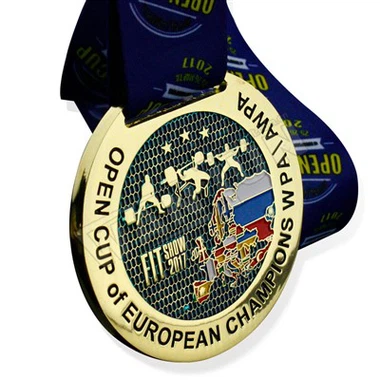
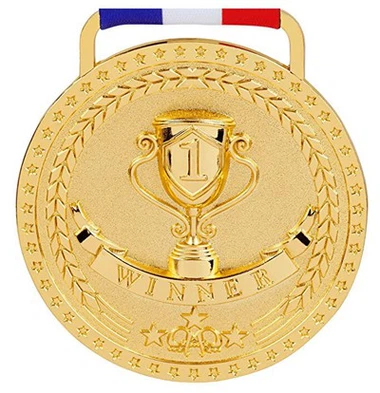
A medal is a small, portable, artistic, coin-like object that can have many different meanings or reasons for issuance. They have a design on one or both sides, and normally made of metal. They may be intended to be worn, suspended from clothing or jewelry in some way. They come in many sizes, from a fraction of an inch to several inches in diameter. Medallions are larger medals (generally four inches or larger) that are generally too large to be comfortably worn. They may be die-struck or cast in a mold. An artist who creates medals is called a medalist.
Benefits of Medal
Recognition:Medals are a tangible way to recognize an individual's achievement and excellence. It serves as proof of their dedication and hard work.
Motivation:The act of receiving a medal can be a motivating factor for individuals to continue their pursuit of excellence and achievements.
Boosting morale:Medals can also boost morale within a team or organization as they serve as a reminder of the collective efforts towards achieving a common goal.
Enhancing reputation:Winning a medal can enhance an individual or organization's reputation, leading to better opportunities and increased credibility.
Monetization of achievement:In certain contexts, medals can be monetized and lead to financial rewards or incentives.
Historical significance:Medals can hold historical significance and become an integral part of an individual's or organization's legacy.


Why Choose Us
Customer Service
We earn your respect by delivering on time and on budget. We built our reputation on exceptional customer service. Discover the difference it makes.
One-stop service
We promise to provide you with the fastest reply, the best price, the best quality, and the most complete after-sales service.
Customer Satisfaction
We are committed to delivering high quality services that exceed our clients' expectations. We strive to ensure that our clients are satisfied with our services and work closely with them to ensure their needs are met.
Quality Assurance
We have a rigorous quality assurance process in place to ensure that all our services meet the highest standards of quality. Our team of quality analysts checks each project thoroughly before it is delivered to the client.
Types of Medal
Gold medal
A gold medal is the highest level of sporting achievement that can be attained by an athlete. It is typically awarded to the winner of an Olympic event or to an athlete who has achieved exceptional results at a major competition.
Silver medal
A silver medal is awarded to the athlete who has finished second in a competition. It is the second-highest level of distinction that can be attained in Olympic events.
Bronze medal
A bronze medal is awarded to an athlete who has finished third in a competition. It is the third-highest level of sporting achievement.
Military medal
A military medal is awarded to military personnel for exceptional service or bravery in combat. These are often given for acts of valor or valorous action in the face of danger.
Civilian medal
A civilian medal is awarded to individuals who have performed acts of bravery, courage, or service to their community or country. These medals often recognize acts of selflessness or going beyond one's duty.
Commemorative medal
A commemorative medal is awarded to individuals to celebrate an important event or milestone, such as the anniversary of a significant occurrence or the inauguration of a leader.
Academic medal
An academic medal is a prize or award given to students for exemplary academic achievements. These include awards for educational excellence, writing, research, and more.
Sports medal
A sports medal is awarded to both professional and amateur athletes for achievements in sports, including local and national events. These medals often recognize significant physical and personal accomplishments.
The Obverse:The Obverse is the front of the medal. This is the side that faces out when worn by the person.
The Reverse:The Reverse is the back side of the medal. This is the side that is against the body when worn. It is often engraved with the recipients name.
The Ribbon:The Ribbon connects the suspension to the brooch. Ribbons were originally made of silk but are now predominately made of man-made materials such as polyester.
The Top Bar:Many medals have a Top Bar that helps attach the brooch to the ribbon. Many top bars are etched or engraved with names or places. Not all medals have top bars.
The Brooch:The Brooch is used to attach the medal to the uniform. It is some form of pin.
The Suspension
The Suspension is used to attach the medal to the suspension ring. It comes in several versions including Narrow Cylinder, Tappered Narrow Cylinder, Wire, Thick Wire, Knob, Beveled, Barrel, Beveled Lug, Tab, Ball, Small Ball, Two-Ring and others.
The Suspension Ring
The Suspension Ring is used to attach the medal to the ribbon. The ribbon is folded through the suspension ring during the mounting process.
Rim Engraving
Some medals may have the rim engraved with the name of the person the medal was awarded to, or have a number stamped or etched into it that may be traced back to the person it was awarded to.

Material of Medal
1. Gold - Most commonly used for high-value or prestigious medals, gold medals are usually made from 14, 18, or 22-karat gold.
2. Silver - Normally used for second place or runner-up, silver medals are usually made of 92.5% silver and 7.5% copper.
3. Bronze - Typically used for third place, bronze medals are usually made of bronze, which is a combination of copper, tin, and sometimes other metals.
4. Nickel - Often used for military and service medals, nickel is a durable and affordable metal that can withstand wear and tear.
5. Brass - Another popular choice for military and service medals, brass is a good option for medals that need to be polished frequently.
6. Zinc - A lightweight and corrosion-resistant metal, zinc is often used for sports medals and other commemorative medals.
7. Pewter - A soft and malleable metal, pewter is typically used for decorative medals and medallions.
Application of Medal
1. Recognition - Medals are often used to recognize and honor individuals for their achievements or contributions in various fields such as sports, military, academics, and the arts.
2. Motivation - Medals are also used as a motivational tool to encourage individuals to strive harder and achieve greater success in their respective fields.
3. Collectibles - Medals are often collected by individuals who appreciate their historical or artistic value. Commemorative medals are often minted to celebrate significant events, anniversaries, or milestones.
4. Graduation - Medals are often awarded during graduations as a symbol of academic excellence or achievement.
5. Sports - Medals are a staple of sports competitions, whether at a local or international level. They are awarded to winners to recognize their achievement and have become a significant part of the sporting tradition.
6. Military - Medals are often used to honor military personnel for their bravery, valor, and service. They serve as a symbol of patriotism and sacrifice and are often held in high esteem by the recipients and their families.

Tips On Maintaining Your Awards Clean
Awards such as trophies, acrylics, plaques, glass and crystal and medals are symbols of achievement. They are physical objects that remind the recipient of their hard work and dedication. It's important to maintain these awards so that they stay as beautiful as when they are received. In this small guide we will share with you essential trophy maintenance tips to keep your awards looking pristine for years to come.
Dusting and Cleaning
Awards are commonly used as displays as a reminder of a recipient's success. Over time though these awards tend to accumulate dust and grime. It's important that one gently cleans their awards with a soft lint free cloth regularly. Be sure to avoid any harsh materials or chemicals when it comes to cleaning these delicate objects.
Avoid Sunlight
When you choose to put your award as a display, don't make the mistake of putting it in a space where sunlight is directly hitting the trophy. It might make the trophy look nice and shiny but over time it will cause fading, discoloration and deterioration. Display your trophy in a shaded part of your space.
Avoid Touching It
We understand having pride in your awards but try to avoid touching it so much. That's why having it on display is a great choice because you don't need to touch it. It's already on display for your admiration. When you touch the award though you might leave fingerprints on it. Although it does not cause damage to the award, it's a good habit to not touch it so much so it stays looking pristine. Or at least if you like to hold your award frequently, make sure to clean it with a soft lint free cloth afterwards so that it looks clean and untouched.
Storage
If you decide to not put your trophy up for display make sure you store it correctly. Make sure it's in a non cluttered place so nothing clashes with your award and causes potential damage. It's also great to wrap your award in a soft, acid-free tissue paper or cloth. This will prevent your award from scratching and tarnishing.
Regularly Inspect Your Trophies
If you notice any damage to your award, whether it's a chip, crack or a loose part, make sure to contact a professional immediately. Letting these damages go without fixing can cause further future deterioration.
Conclusion
Awards are a great reminder of your achievements. They are the perfect keepsakes to remember your success years later. That said, maintaining them is crucial so that they look as pristine as when you got it. We hope these tips we shared with you help you do just that.
Trophies and awards are not exactly the same, although they are often used interchangeably. A trophy is a type of award that is usually a physical object, such as a statuette, cup, or shield, that is given to someone as a symbol of their achievement or victory. An award can be any form of recognition or honor that is given to someone for their excellence or merit in a certain field. An award can be a trophy, but it can also be something else, such as a certificate, diploma, medal, badge, rosette, prize money, scholarship, or title.
For example, if you win a sports tournament, you might receive a trophy as an award for your performance. But if you win a writing contest, you might receive a certificate or a cash prize as an award for your work. Both trophies and awards are meant to acknowledge and celebrate your achievements, but they can take different forms depending on the context and the purpose.
If you are looking for a reliable and affordable online trophy store, you might want to check out Tower Trophies. They offer a wide range of trophies and awards for various occasions and events, such as sports, academics, corporate, and personal. You can customize your trophies and awards with your own design, logo, text, and color. They also provide fast delivery and excellent customer service. You can visit their website towertrophies.com to browse their products and place your order.
The 3 Difference Between Acrylic Vs. Crystal Awards
It's great to recognize your employees or team members for their hard work and ongoing contributions to your organization, and you have myriad options to choose from for your awards. You can opt for a traditional custom wood plaque, or you can go for something really special with and acrylic or crystal award. However, before you decide, it is important that you understand the difference between these two materials. At first glance they may look very similar, but there are some key distinctions that you need to be aware of.
Pricing
While an acrylic or crystal award is likely to cost a bit more than a custom wood plaque, the unique beauty of these pieces makes up for the additional cost. Acrylic tends to be slightly cheaper than crystal because it is easy to work with and mold into the desired shape. Crystal takes more time to cut and carve, so it is a much more labor-intensive process to produce a crystal award, hence the higher price tag. However, even crystal awards can be affordable if your design is not overly complex or delicate. It all depends on the amount of time and attention to detail your design will require, with intricate designs costing significantly more to produce. Your timeline also contributes to the pricing, with rush orders entailing additional costs over orders placed well in advance of your awards event.
Texture
In the texture is where you will find the most obvious differences between acrylic and crystal awards. Acrylic materials are very lightweight, making them easy to transport. Crystal, on the other hand is usually on the heavier side, so it is in your best interest to keep them a bit smaller so as not to overburden your awarded team members. Although the material is heavier, crystal is significantly more delicate than acrylic and can easily break if dropped or knocked over. Acrylic is fairly difficult to break, but its surface can scratch relatively easily. Luckily, these surface scratches can usually be buffed and polished out, bringing the award back to its original appearance. Crystal offers a much tougher surface, so it is highly unlikely to scratch due to normal wear and tear.
Appearance
It is the appearance that offers the most striking differences between acrylic and crystal awards. From far away, the two can look very similar, but upon closer inspection, it is clear that the two couldn't be more different. Light is able to pass through both materials, giving them their clear appearances, but when it comes to crystal, you can see the light shimmer on its way through, giving it a much more lustrous and elegant look. When compared to crystal, acrylic can look and feel somewhat cheap. To truly show your team members how special and important they are to your organization, crystal is definitely the way to go.
Our company has done Beijing Winter Olympics, Hangzhou Asian Games, Qatar World Cup, China Industry The United States, 2023 Australian Women's World Cup, Aerospace Culture and Innovation, wine cooperation unit, Wuliangye developer (1. Beijing WAMTA, Zhongniangpinzhi), Century Confused, Huadu Wine Industry, Jinzun Wine Industry, Jinsha Wine Industry , Zhang Gong Winery.Our international market is in America, Western Europe and South Europe, Middle East, and Oceania.Top Quality and Service are the soul of the JYB Company. We strongly promise to our clients that anything defective will be replacement for free. Expect to work with clients.


FAQ
We're professional medal manufacturers and suppliers in China, specialized in providing high quality products with low price. We warmly welcome you to wholesale cheap medal made in China here from our factory. For customized service, contact us now.
Roll Gold Aluminium Cap, Metal Game Cup Award Football Trophy, trophy football