


How to Choose the Perfect Cricket Trophy Cup for Your Tournament: A Complete Buyer’s Guide
Oct 23, 2026
Leave a message
Most tournament organizers only discover the real problems after the order is placed. The cricket trophy cup arrives later than promised, looks thinner under stage lights than it did online, or feels too light once a player actually lifts it. Size, material, engraving space and delivery timing all need to line up. We work with clubs, schools and regional associations on their awards each season. The points below reflect the issues that come up most often and the solutions that have proved reliable.
Types of Cricket Trophy Cups
Material is the first major decision. Clubs most often choose between brass, zinc alloy, resin and crystal.
|
Material |
Appearance |
Durability |
Weight |
Typical price range (USD, bulk order of 20+) |
Best for |
|
Brass |
Warm traditional gold |
Excellent, polishable |
Heavy |
$85–190 |
Senior club, representative & touring cups |
|
Zinc alloy |
Bright metallic, easy plating |
Very good |
Medium |
$45–115 |
Most league and district events |
|
Resin |
Detailed cricket figures/scenes |
Good with careful handling |
Light |
$18–60 |
School, junior & multi-category days |
|
Crystal |
Clean, modern, light-catching |
Fragile |
Medium |
$95–230 |
Corporate finals or prestige nights |
Price notes (2025–2026 season):
Ranges apply to standard catalogue pieces in quantities of 20 or more and exclude shipping, engraving setup fees and custom logo tooling. Single pieces or fully custom touring designs usually cost more. Custom heavy brass touring cups commonly fall in the $200–350 range. Prices move with metal costs-always request a current written quote for your exact specification.
Metal generally feels more substantial in the hand. Resin allows more creative cricket shapes (batter in shot, stumps or crossed bats) at lower cost, which helps when you need many category awards. Crystal suits formal dinners but needs careful packing.
How to Choose the Right Size and Design
Size must match both the stage and the age group.
|
Event level |
Height range |
Base size |
Notes |
|
School / junior festival |
8–12 in (20–30 cm) |
3–4 in |
Light resin or small metal; easy for children |
|
Club / district |
12–16 in (30–40 cm) |
4–5 in |
Balanced metal or detailed resin |
|
League / state |
16–20 in (40–50 cm) |
5–6 in |
Substantial metal with clear engraving area |
|
National / elite |
20–28+ in (50–70 cm) |
6–8 in |
Premium brass or crystal |

Design priorities for cricket
Enough flat surface for tournament name, year and category.
Stable base so the piece does not tip during presentation photos or when carried onto the field.
Clear cricket motifs (crossed bats, stumps, ball or player action).
Finish that matches the formality of the event-antique brass for traditional clubs, bright gold or dual-tone for modern T20 nights.
Cricket-specific practical points
T20 and one-day festivals usually need more category awards (best batter, best bowler, player of the match, most sixes, fair play) than multi-day matches. Plan the total number early.
Some clubs run a touring cup that travels with the winning team until the next season. These need thicker plating and a robust base.
The main championship piece is normally presented last. Its size and finish should stand clearly above the category awards.
Junior and women's events often prefer slightly lighter pieces and more colourful finishes. Senior representative matches lean toward heavier metal.
Award naming should match the format: "Player of the Match" works well for limited-overs; multi-day games more often use "Best Batter" and "Best Bowler" across the whole match.
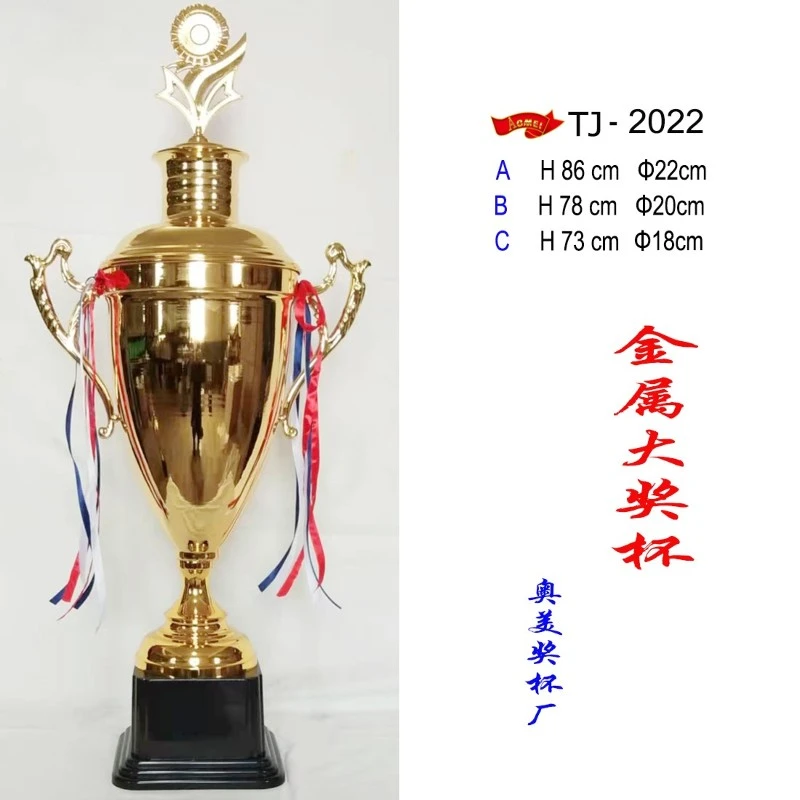

Engraving – Tournament name, year and category are essential. Winner's name can be added after the final only if the supplier offers a fast turnaround service. Always insist on a digital proof and check every detail before production.
Logo application – Club or sponsor logos as metal plates, printed inserts or raised relief noticeably increase the perceived quality of the finished piece.
Plating and finish – Gold, silver, antique bronze or two-tone finishes create hierarchy or match club colours.
Custom work typically adds 5–10 working days. Confirm the exact lead time in writing.
A practical approach:
The main championship cricket trophy cup often takes a larger share of the budget, especially if it is a higher-spec or touring design.
Category awards can use a lower-cost material or smaller size to keep the overall spend manageable.
Price guidance (2025–2026)
Bulk (20+ units), standard catalogue:
– Resin $18–60
– Zinc alloy $45–115
– Brass $85–190
– Crystal $95–230
Single pieces or custom heavy touring brass: typically $200–350
Volume discounts usually begin around 20–25 units. Combining all categories into one order is almost always cheaper than placing separate small orders.

01
Examples from recent seasons
A premier division club wanted a touring cup that would travel with the winning team. Their earlier thinner zinc-alloy piece showed plating wear after one season. They switched to a custom heavy brass design with thicker plating and a reinforced base. That single piece cost approximately $280–320-higher than that club's previous full set of category awards-but after three seasons it still only needs light polishing. For a one-off presentation that will not travel, the extra cost is usually unnecessary.
02
Lead times
Standard catalogue designs: allow 6–8 weeks.
Full custom logos or unique shapes: allow 10–12 weeks.
Ordering closer than this raises the risk of delayed delivery or rushed compromises.
03
Examples from recent seasons
A district T20 festival in the 2024–25 season needed eight awards: one main championship cup and seven category pieces. They chose mid-range zinc alloy for all. Average unit cost including engraving was around $85–90. Total including domestic shipping came in just under $780. Because the quantity was under the usual bulk threshold, the per-unit price sat slightly above pure volume rates, yet the trophies arrived on time and met expectations.
04
Cross-border notes
If ordering from another country, factor in possible customs duties, longer transit times and damage risk. Ask about insurance and who covers breakage. Crystal and detailed resin are especially vulnerable.
Common Mistakes and Decision Checklist
Frequent problems and their consequences:
Ordering too close to the event → late delivery or forced acceptance of whatever is available.
Choosing purely on lowest unit price → weak bases, thin plating or inaccurate detailing that show under lights.
Skipping the engraving proof → spelling or date errors that are expensive to correct.
Ignoring weight and balance → pieces that tip during presentation or look awkward in photos.
Leaving category awards until the final week → mismatched styles and higher last-minute costs.
Before confirming an order, check:
Height suits the stage and age group.
Material matches expected handling and storage.
Clear space exists for engraving and logos.
Digital proof has been approved.
Total cost (including shipping and setup) fits the budget.
Delivery date is confirmed in writing with enough buffer.
For a touring cup, plating and base are robust enough for repeated handling.

Frequently Asked Questions
Q: How many awards does a typical cricket tournament need?
A: One main championship cricket trophy cup plus awards for best batter, best bowler, player of the match and often fair play. Larger festivals with multiple age groups commonly need 8–15 pieces.
Q: What is a realistic price range for a mid-level club event?
A: A set of 6–8 mid-range zinc-alloy awards often falls between $450 and $900 including engraving and domestic shipping, depending on exact heights and finishes.
Q: How far in advance should we order?
A: Allow 6–8 weeks for standard designs and 10–12 weeks for full custom work. Peak cricket seasons can extend these times.
Q: Can the winner's name be added after the final?
A: Yes, if the supplier offers a rapid engraving service. Confirm turnaround and cost in advance.
Q: What should I ask a supplier before ordering?
A: Request current prices for your exact heights, written lead times, sample photos of previous cricket orders, proof policy, packaging details and who pays for shipping damage.
Q: How do I look after a touring cup between seasons?
A: Store it in its original box or a soft cloth bag. For brass or zinc alloy with standard plating, light polishing with a soft dry cloth is usually sufficient. Avoid abrasive cleaners or harsh chemicals that can damage the plating or protective lacquer.
Q: We also organise other sports events. Can designs be coordinated?
A: Some clubs adapt clean geometric bases or proportions sometimes seen in curling trophy ideas or squash trophy styles. The cricket motif should remain dominant so the piece still reads clearly as a cricket award.

Should we also order medals or certificates?
Many tournaments give medals or certificates to all finalists or participants. These can be ordered from the same supplier to keep finishes consistent and simplify logistics.When you are ready to order, tell us the format (T20, one-day or multi-day), the number of awards needed, and whether you want a touring cup. We will provide samples, proofs and a clear written quote for a custom cricket trophy cup matched to your tournament's level and budget.