


Types of Sports Trophies: Which One Is Best for Your Event?
Oct 09, 2026
Leave a message

A few years ago, a PE teacher from a school district ordered 80 trophies for an end-of-season tournament. She picked the tallest, shiniest cups from a catalog because they looked impressive. When the boxes arrived a week before the event, she called us in a panic. The cups were too heavy for the younger kids to carry on stage, the gold color didn't match her school colors, and the freight cost was almost as much as the trophies.
We fixed it with a quick re-order, but the lesson stuck. Choosing awards is not only about looks. Size, weight, material, budget and timing all matter. If you get one of them wrong, you either overspend or hand out something that feels cheap.
This guide walks you through the main types of trophies, how the materials compare, what works for volleyball and football, and what to check before you place an order. It comes from years of making Sports Medals And Trophies for schools, clubs, leagues and event organizers in the US, Europe and the Middle East.
Quick Answer: Which Type of Sports Trophy Should You Choose?
If you want a short answer, here it is:
For most team sports events, a metal or resin cup trophy for the top three teams plus medals for all players gives the best balance of look, cost and shipping weight.
For youth leagues, lightweight resin figures or medals are safer and cheaper.
For corporate or premium tournaments, crystal or acrylic awards look more high-end.
For large events with hundreds of participants, medals do the heavy lifting and trophies are kept for winners and special awards like MVP.
Here is a simple guide by situation:
|
Event Type |
Number of Winners |
Suggested Award Mix |
Budget Level |
|
Small school or club match |
10–30 players |
3 cup trophies + medals for every player |
Low |
|
Youth league season |
50–150 kids |
Resin figure trophies for teams + medals for all |
Low–Medium |
|
City or regional tournament |
100–300 players |
Metal cups for top 3 + medals + MVP awards |
Medium |
|
Corporate or charity event |
20–100 guests |
Crystal or acrylic awards + a few medals |
Medium–High |
|
Large championship or federation event |
500+ players |
Large perpetual trophy + medals for all + special awards |
High |
Now let's look at each option in detail.
The Main Types of Sports Trophies Explained
There are seven award formats we see most often. Each one has a natural fit.
Cup Trophies (The Classic Choice)
When people picture a trophy, they usually picture a cup on a base with two handles. It's the most recognized award in sports, and that's exactly why it works well for championships. Winners know instantly what it means.
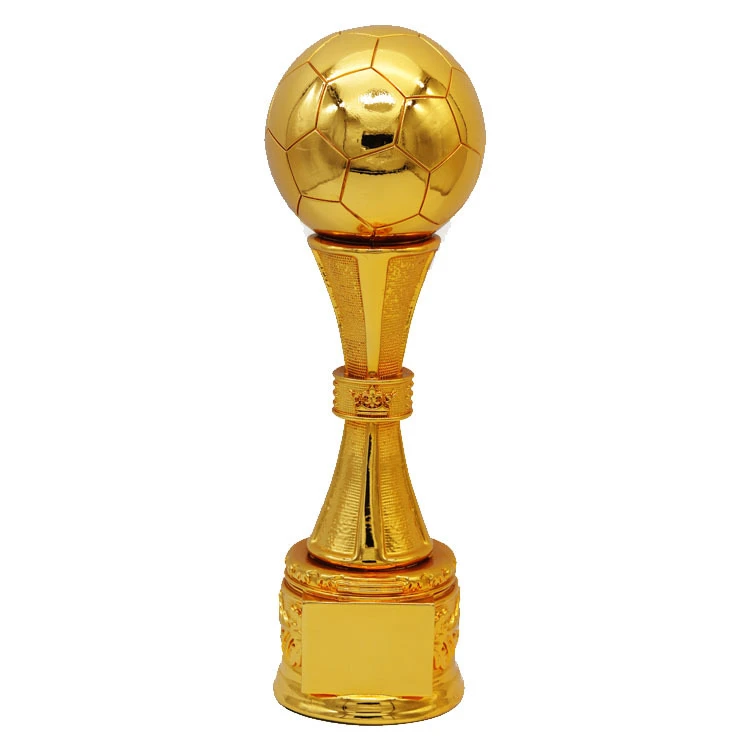
Cups are usually made from zinc alloy, brass, aluminum or resin with electroplated finishes in gold, silver and bronze. Common heights run from about 18 cm for small awards up to 60 cm or more for main championship prizes. A cup around 30 cm high is a popular size for team awards because it looks solid without being a nightmare to ship.
Figure and Statue Trophies
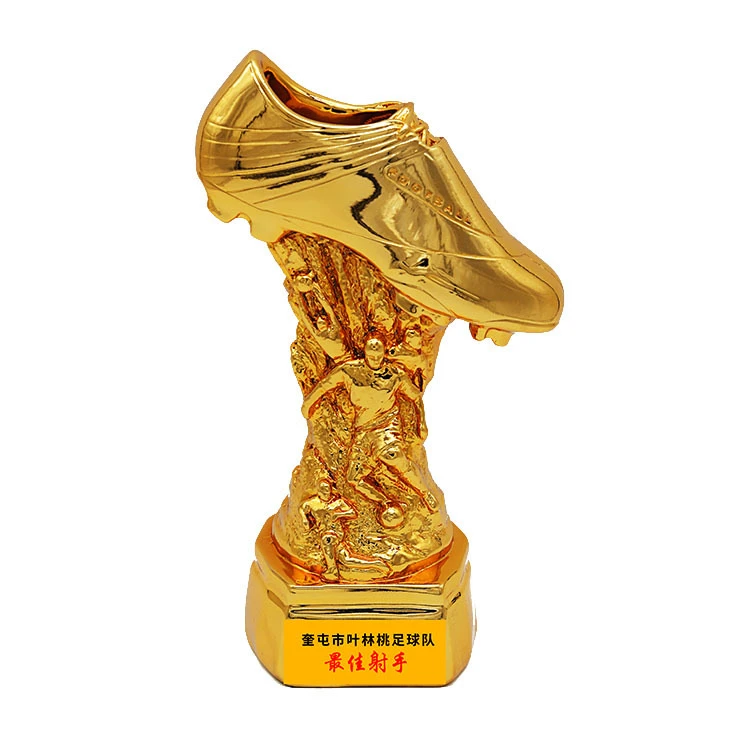
Figure trophies have a sculpted athlete on top, such as a football player kicking a ball or a volleyball player mid-spike. They tell people the sport at a glance, which is great for multi-sport events where you need to tell winners apart.
Most are made from resin or zinc alloy. Resin is lighter and cheaper, and it can hold fine detail well. Zinc alloy feels heavier and more premium, but it costs more to tool.
Plaques and Shield Awards
Plaques are flat awards, usually wood with a metal or printed plate. Shields are a bit more traditional and popular in football clubs in Europe and the Middle East. They hang on a wall, so they're good for clubs that want to display awards in a clubhouse. They're also easy to ship flat, which keeps freight low.
Crystal and Glass Trophies
Crystal trophies (usually optical or K9 crystal) look clean and elegant, especially with laser engraving. They suit corporate tournaments, golf events, VIP awards and charity matches. The downside is fragility. Packaging has to be done properly, and they're not ideal for young kids.
Acrylic Trophies
Acrylic gives you a similar look to glass, but it's lighter and much harder to break. It's also easier to print in full color, so it's great for detailed logos and sponsor artwork. Many organizers choose acrylic when they want a modern look at a moderate price.
Perpetual and Rotating Trophies
A perpetual trophy is passed from one winner to the next each year. The winning team keeps it for a season, and their name is added to the base or to small plates on it. Big leagues use these for their main championship, and often give a smaller replica for the winners to keep. If you're starting a new annual league, it's worth thinking about this early, because the base needs enough room for future engraving.
Sports Medals: When a Medal Makes More Sense Than a Trophy
Medals are worn or held, not displayed on a shelf. They're cheaper per piece, lighter to ship and easy to give in large numbers.
People often ask about trophy vs medal. Here's how we usually explain it:
Use a trophy to honor a team or a top individual result. It's a display piece and a statement.
Use a medal when you want to recognize every participant or place-holders in a big field.
Use both when you want the winner to feel special and everyone else to still go home with something.
A typical medal is 50–70 mm across and 3–5 mm thick. Custom shapes, 3D designs, enamel colors and printed ribbons can all be made to match your event theme.

Materials Compared: Weight, Durability and Cost
If you only compare photos, most trophies look the same. Material is where the real difference is, and it affects weight, feel, price and shipping. Here's a practical comparison.
|
Material |
Approx. Density (g/cm³) |
Feel in Hand |
Durability |
Typical Use |
|
Zinc alloy |
6.6–6.7 |
Heavy, premium |
High |
Cups, medals, premium figures |
|
Brass |
~8.5 |
Very heavy, luxury |
Very high |
High-end awards, perpetual trophies |
|
Aluminum |
~2.7 |
Light |
Medium–High |
Large cups, budget-friendly options |
|
Resin |
~1.1–1.8 (depends on filler) |
Light–medium |
Medium |
Figures, youth trophies |
|
Acrylic |
~1.19 |
Light, smooth |
Medium–High |
Modern awards, full-color printing |
|
K9 / optical crystal |
~2.5 |
Heavy, clear |
Medium (can chip) |
Corporate and VIP awards |
|
Wood base |
~0.5–0.9 |
Warm, natural |
Medium |
Bases, plaques, shields |
Density numbers are typical reference values. Actual weight depends on the design and wall thickness, but they give you a good sense of how each material behaves. To put it in perspective, a zinc alloy cup and a resin cup of the same size can differ in weight by more than half, and that difference shows up directly on your freight bill.

Zinc Alloy vs. Resin: Which Holds Up Better in Real Use?
This is the question we get most often when someone is looking for the best material for trophies.
Zinc alloy is solid metal. It survives drops, rough handling and long shipping trips very well. It also takes plating nicely, so the gold and silver finish looks rich. The trade-off is weight and a higher unit price for new designs.
Resin is lighter and can be molded into almost any shape, which is why it's used for most athlete figures. It's cheaper, but it can chip if it's dropped on a hard floor, so packaging matters.
Our usual advice: if the trophy is going on a stage and into a display cabinet, zinc alloy is worth it. If you're ordering 100 trophies for a kids' league, resin gets you more for the money.
How Plating Works
Gold, silver and bronze finishes on metal trophies are usually done by electroplating, sometimes with a clear protective coating on top. Here's what we tell customers:
A well-plated finish should stay bright for years with normal indoor display.
Handling with bare hands, humidity and outdoor exposure can dull it faster. Salt air near the coast is especially hard on cheap plating.
Wipe with a soft dry cloth. Avoid harsh cleaners.
If your event is outdoors, such as a beach tournament, ask for a protective coating or choose acrylic or resin designs that aren't affected by moisture.
Volleyball Trophies And Awards: What Works Best
Volleyball events vary a lot. A school league in Texas, a beach tournament in Dubai and a club competition in Italy all have different needs. Here's how we usually guide Volleyball Trophies And Awards based on the setting.
School and youth leagues: Resin figure trophies with a volleyball player on top are popular, and they're light enough for teenagers to hold up on stage. Add medals for every player, and you've covered both the team and the individual.
Club and regional tournaments: Metal cups in gold, silver and bronze sizes (for example 35 cm, 30 cm and 25 cm) give a clear visual ranking. Many organizers add a ball-shaped topper to make it obviously volleyball.
Beach volleyball: This is where material choice really matters. Sun, sand, sweat and salt air are tough on trophies. Acrylic or resin awards with UV-stable printing, or metal medals with a good protective coating, tend to last better than delicate plating.
A typical award set for a volleyball tournament might look like this:
|
Award |
Suggested Item |
Typical Size |
|
Champion team |
Large metal cup or figure trophy |
35–45 cm |
|
Runner-up |
Medium cup |
30–35 cm |
|
Third place |
Smaller cup |
25–30 cm |
|
MVP |
Figure trophy or crystal award |
25–30 cm |
|
Best setter / best spiker |
Small trophy or acrylic plaque |
18–22 cm |
|
All players |
Medals with ribbons |
50–65 mm |
Add a printed certificate and you have a complete award package without going overboard on cost.
Football Team Trophies: Ideas for Leagues, Schools and Clubs

A quick note on wording. In the US, "football" means American football. In Europe, the Middle East and most of the world, it means soccer. Both sports are huge, and both need strong award programs, so we make football team trophies in both styles.
American football: Common awards include league championship trophies, bowl-style trophies, MVP and offensive/defensive player awards. Helmet-shaped and football-shaped toppers are very popular.
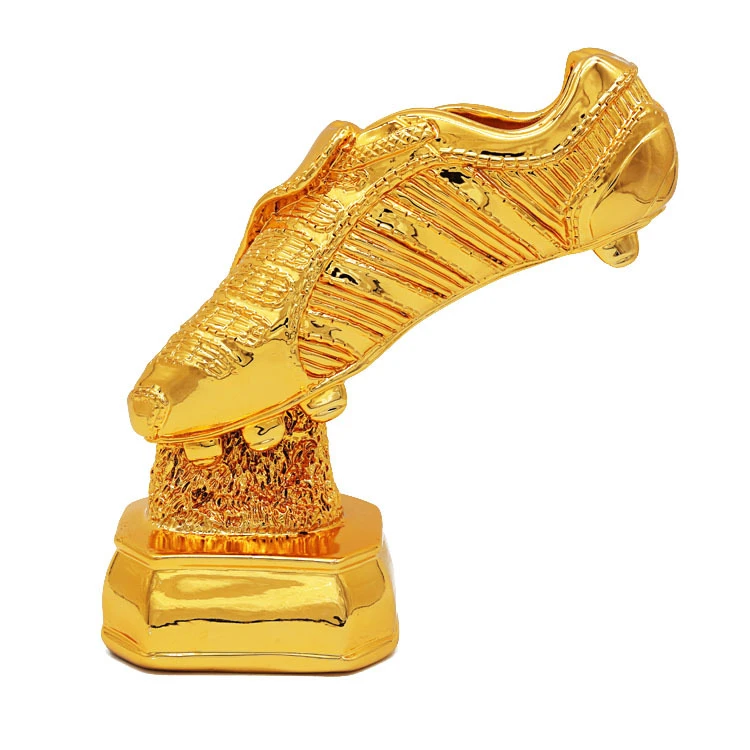
Soccer (football): In Europe and the Middle East, the classic cup with two handles is still king for league and cup winners. Individual awards like Golden Boot, Best Goalkeeper and Player of the Season are typically figure trophies or tall statues. Football is extremely popular across the Gulf region, and clubs and academies there often prefer a bold gold finish and larger sizes for main prizes.
Large trophies need a bit of planning:
A big zinc or brass cup can weigh several kilograms. Check who will carry it on stage and how it will travel afterward.
Wooden bases add weight and need to meet import rules for wood packaging if they ship in wooden crates.
Champion teams often love a full-size version for the ceremony and a smaller replica to keep. It saves money and is easier to store.
For a season-end awards night, a good structure is: one perpetual trophy for the league champion, cups for the top three teams, individual awards for top players, and medals for everyone on the squad.
How to Match the Trophy to Your Event Size and Budget
Many buyers start with a total budget and work backward. That's smart. Here's a rough way to split it up by event size:
|
Event Size |
Trophies |
Medals |
Notes |
|
Small (about 20 people) |
3–5 |
20 |
Spend more per piece; a quality cup makes a big difference |
|
Medium (about 100 people) |
8–12 |
100 |
Mix of cups, MVP awards and medals |
|
Large (500+ people) |
15–30 |
500+ |
Medals carry most of the volume; trophies for winners only |
A good rule of thumb is to spend around 60–70% of the budget on the top awards and use the rest for participation medals. Winners remember the trophy, and everyone else remembers whether they got something at all.
Then comes the common question: how much do sports trophies cost? Prices vary widely by material, size, plating and how custom the design is. As a very rough range, simple medals can cost only a few dollars each in volume, small resin trophies are a bit more, and large metal or crystal trophies can go from tens to well over a hundred dollars each. Quantity, artwork complexity and shipping method all move the number. The fastest way to get an accurate figure is to send your target size, quantity and budget and ask for a quote.
Custom Sports Trophies: What to Know Before You Order
Ready-made trophies are fine for simple events. But if you want your logo, team colors, sponsor names or a special shape, custom is the way to go.
Here's how the process usually works with us:
Send your idea. A rough sketch, a photo of something you like or just a description is enough.
Get a design proposal. Our team prepares a drawing or 3D render showing size, material and finish.
Confirm details. Logo, engraving text, colors, packaging.
Make a sample. Depending on the product, samples take about 15–35 days. Simple medals are on the faster end, and complex 3D figures or multi-part trophies take longer.
Approve and produce. After you sign off, mass production starts.
Pack and ship. We pack for sea or air freight and can send photos before shipping.
Our minimum order is just one piece, so you can test a design or order a single perpetual trophy without committing to a big batch.
Working with a Custom Sports Trophies Manufacturer
When you deal directly with a custom sports trophies manufacturer, you skip a lot of middle steps. You can talk to the people who make your product, change details quickly and get honest answers about what's possible. For example, if a thin arm on a figure is likely to snap, we'll tell you upfront and suggest a stronger design.
A real sports trophy factory also controls quality at every stage: mold making, casting, polishing, plating, assembly and packing. That means fewer surprises when the goods arrive.
Buying in Bulk: Wholesale Sports Trophies and Medals for Tournaments
If you're a distributor, a sports shop, an event company or a league running many tournaments each year, buying in volume brings the unit price down. Wholesale sports trophies are usually made in repeat sizes and styles, so you can reorder easily and keep stock on hand.
For medals, custom sports medals wholesale orders often include your own die-cast design, enamel colors and custom ribbons. Once the mold is made, repeat orders are quicker and cheaper.
For organizers planning big events, bulk trophies for tournaments can be split into several shipments, so you're not storing thousands of pieces at once.
One tip that saves money: standardize your award sizes across events. Three or four core sizes are much easier to reorder than a dozen unique ones.
Packaging and Shipping
Damage in transit is the most common problem with trophies, and it's mostly avoidable. We use individual inner boxes or foam, corner protection for larger pieces and strong export cartons. Fragile crystal awards get extra cushioning. Small parts like cup lids and figure toppers are packed separately when needed, and we number cartons clearly so your team can find the right award quickly at the venue.
Safety and Compliance Requirements You Should Know
If you're importing awards into the US, EU or Middle East, a few rules are worth knowing. Requirements vary by product and by who the end user is, so treat this as a general overview, not legal advice.
United States:
CPSIA sets limits on lead in products made for children aged 12 and under. Not every trophy counts as a children's product, but many youth league buyers ask for test reports to be safe.
California Proposition 65 requires warnings if a product exposes users to listed chemicals above certain levels. Lead in metal alloys is the usual concern.
European Union:
REACH restricts certain substances in articles, including limits on nickel release for items that touch the skin. This matters for medals worn around the neck or handled for a long time.
EN 71-3 covers migration of certain elements in toys. Trophies aren't toys, but some buyers ask for it on kid-oriented awards.
Wood and packaging (worldwide):
Wooden pallets and crates should meet ISPM 15 rules, which means they're heat-treated or fumigated and marked. Otherwise customs can hold or reject a shipment.
Middle East:
Many countries in the Gulf region ask for standard commercial documents, and some product categories need conformity certificates. Check with your local importer or customs broker before ordering.
Our advice:
tell your supplier the destination market up front and ask for material test reports when needed. A good factory can provide them, and it's much easier to arrange before production than after.
Sports Awards Trends to Watch

The awards market keeps changing. These are the trends we see in customer requests:
Eco-friendly materials. More buyers ask for recycled resin, recycled metal and bamboo or FSC-certified wood bases.
Smaller custom runs. Clubs and schools want personalized awards in smaller quantities rather than one design for everyone. Low minimums make this possible.
Mixed materials. Metal with acrylic, wood with crystal, or resin with enamel inserts are getting more common because they look modern without costing much more.
Custom medals with detail. 3D designs, glow effects, spinning centers and custom ribbons are popular for running, cycling and multi-sport events.
Digital touches. Some organizers add QR codes on the back of medals or plaques that link to results or event photos.
The overall direction is clear: people want awards that feel personal, not generic.
Common Mistakes When Choosing Sports Awards
After years in this business, these are the mistakes we see most:
Choosing by price alone. The cheapest option often ends up more expensive after freight, damage and re-orders.
Ignoring weight. A heavy trophy is fine for one champion. It's a problem when you need 60 of them shipped by air.
Wrong size for the venue. A tiny trophy disappears on a big stage, and a giant one is awkward for a small event.
Skipping the proofreading. Misspelled names or wrong dates are the most painful errors. Check every line of engraving twice.
Ordering too late. Between design, sampling, production and shipping, custom awards take time. Start early, ideally two to three months before the event.

How to Choose a Reliable Trophy Manufacturer
Whether you're an organizer or a reseller, the supplier you choose affects everything. Here's a simple checklist:
Can they show real photos and videos of their factory and production process?
Do they offer samples and clear timelines?
Can they provide material information and test reports when required?
Do they have a quality check before packing?
How do they handle problems like damage or mistakes?
Are they easy to communicate with, and do they reply promptly?
It also helps to know whether you're dealing with a factory or a trading company:
|
Factor |
Direct Factory |
Trading Intermediary |
|
Price |
Usually lower, no extra margin |
Includes middleman margin |
|
Customization |
Flexible, changes handled in-house |
Depends on their suppliers |
|
Lead time control |
Direct control |
Depends on third parties |
|
Problem solving |
Faster, the source is the same |
Slower, more back and forth |
Neither is wrong for every case, but for custom work, dealing directly with the maker usually saves time and avoids miscommunication.
FAQ
Q: What are the different types of trophies?
A: The most common types are cup trophies, figure or statue trophies, plaques and shields, crystal or glass awards, acrylic awards and perpetual trophies. Medals are also widely used alongside them.
Q: What is the difference between a trophy and a medal?
A: A trophy is a display piece that usually honors a team or top individual. A medal is worn or held and is normally given to more people. Many events use both.
Q: What is the best material for sports trophies?
A: It depends on your goal. Zinc alloy and brass feel premium and last a long time. Resin is light and affordable. Acrylic and crystal suit modern or corporate awards. For most tournaments, a mix works well.
Q: How much do custom sports trophies cost?
A: The price depends on size, material, plating and how detailed the design is. Medals are the most affordable, while large metal or crystal trophies cost more. Share your quantity and budget, and we can suggest options that fit.
Q: How long does it take to make custom trophies?
A: Sample time is usually 15–35 days depending on the product, with simpler items on the shorter end. Mass production takes additional time after sample approval, so plan ahead for your event date.
Q: What size trophy is best for youth leagues?
A: For kids, lighter trophies around 15–25 cm are easy to hold and safe on stage. Resin figures and medals are great youth league trophy ideas because they're light and cost-effective.
Q: Are zinc alloy trophies safe for kids?
A: Zinc alloy trophies are widely used, but for children's events it's smart to ask your supplier for test reports that match your local requirements, such as lead and nickel limits. Lightweight resin or medals can be a more comfortable choice for very young children.
Q: Can I order wholesale sports trophies with a custom logo?
A: Yes. Wholesale sports trophies can be customized with your logo, colors and engraving. We accept orders from just one piece, and larger quantities bring the unit price down.
The best award is the one that fits your event: the right size, the right material, the right budget and the right message for the people receiving it. A cup for the champions, a figure for the MVP and a medal for every player is a simple formula that works for almost any league.
If you're planning an event and want help choosing, or you need a partner for Sports Medals And Trophies in custom designs, we're happy to help. We're a direct factory with a minimum order of just one piece, and we ship to the US, Europe, the Middle East and all over the world.
Send us an email with your event details, quantity and rough budget, and our team will get back to you with recommendations, a quote and a free design proposal.